How to Get Rid of Flies in Kitchen a Complete Guide


Think swatting one fly solves your problem? Think again. That fly is a distraction. The real fight is against the hundreds you cannot see.
A single fly means an invasion has started. It is a sign of a much bigger problem. It has likely already laid its eggs. You need to act now. If you're overwhelmed, Call +1 855 224 3071 for immediate help.
Why That One Fly Is a Bigger Problem Than You Think
It's tempting to dismiss a single fly as a random intruder. You grab the swatter, take care of it, and think the problem is solved. Wrong.
More often than not, that first fly is a scout. It’s signaling that your kitchen is the perfect place for its family to move in. The real issue isn't the fly you can see, but the hundreds of eggs it may have already laid in some hidden corner.
Flies are drawn to two things: moisture and decaying organic stuff. Think spilled juice under the fridge, a few crumbs in a corner, or a damp sink drain. To a fly, these are five-star resorts and the perfect nursery for their eggs. They'll find these spots and turn your minor nuisance into a major headache, practically overnight.
The Alarming Speed of the Fly Life Cycle
The speed at which flies multiply is what catches everyone off guard. A single female house fly can lay up to 600 eggs in her short life, usually in batches of 75-150 every few days.
In a warm, comfortable kitchen, those eggs can go from larva to a full-grown, egg-laying adult in as little as a week.
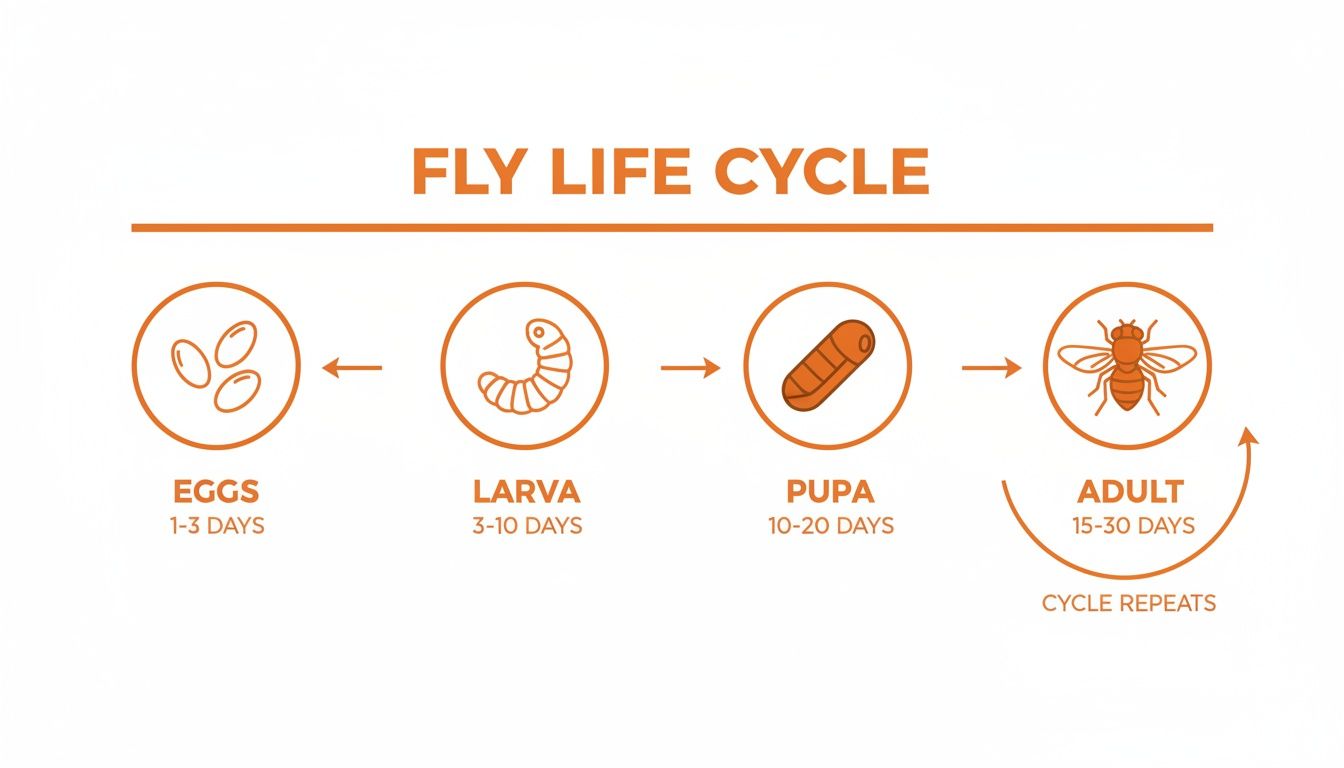
This image makes it brutally clear: the entire cycle can be over in just 7 to 10 days. That means a whole new generation is ready to breed before you've even realized you have a problem. You can dive deeper into this in our article covering the complete life cycle of flies.
The takeaway is simple: seeing one fly means you're already behind. The goal isn't just killing the adult flies but eliminating the breeding grounds to break the cycle. If you're already seeing multiple flies daily, the situation may require immediate action. For a fast and effective solution, Call +1 855 224 3071 to connect with a professional.
Find and Eliminate Hidden Fly Breeding Grounds
If you really want to know how to get rid of flies in your kitchen, you have to start thinking like one. Flies aren't just looking for a quick meal; they're scouting for the perfect place to lay hundreds of eggs. Winning this fight means finding and destroying their nurseries before the next generation can ever take flight.
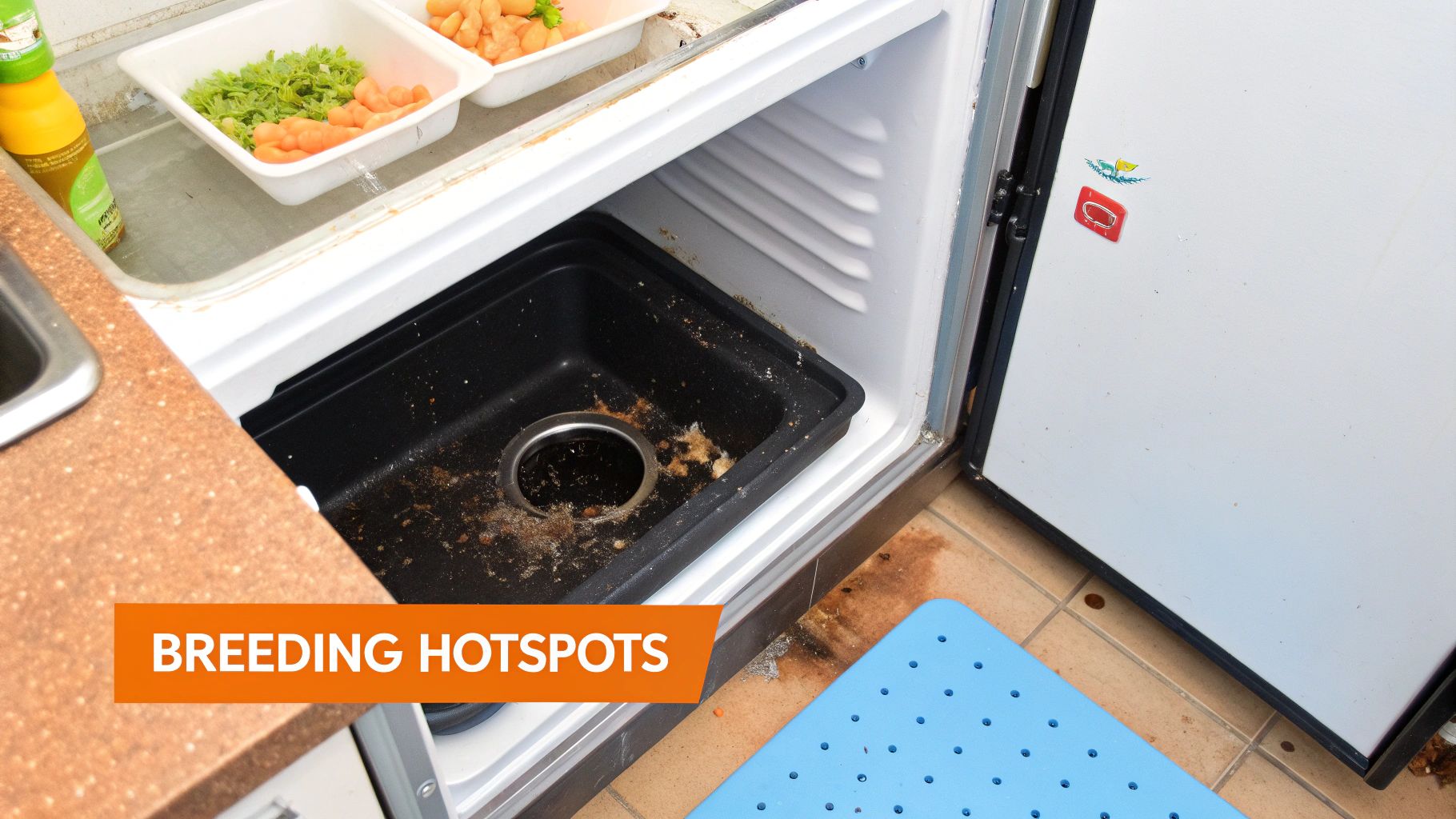
The trash can is the obvious first suspect, but flies are much more resourceful than that. Their ideal breeding grounds are almost always out of sight, offering the moisture and decaying organic gunk they need to thrive. A single forgotten spill under the fridge or a few bits of food stuck in the garbage disposal can fuel a massive population boom.
Your Hidden Hotspot Checklist
It's time to go on a hunt. Flies are experts at finding those small, damp, and forgotten places to lay their eggs. Use this list to check the most common breeding spots people almost always overlook:
- Under and Behind Appliances: Seriously, pull out your fridge, stove, and microwave. You’re looking for old spills, crumbs, or any condensation that has created a prime breeding environment.
- Sink Drains and Disposals: Scraps of food build up into a thick, organic sludge inside your pipes. To a drain fly, this is a five-star hotel.
- Recycling Bins: Those unrinsed soda cans, beer bottles, and old food containers leave a sticky residue that fermentation-loving flies adore.
- Fruit Bowls: It only takes one piece of overripe fruit at the bottom of the bowl to become a major attractant.
- Pet Food Areas: Spilled kibble mixed with a little water creates a damp, nutrient-rich paste that flies find irresistible.
To really get a handle on drain flies, adopting some simple habits to prevent clogged drains is a game-changer, since those pipes are a top-tier breeding ground.
If you’ve cleaned everywhere and still have a fly problem, the source could be deeper than you can reach. For those persistent issues, Call +1 855 224 3071 for professional guidance.
It's a grim thought, but a single fly can carry over 1.9 million bacteria. They’re linked to spreading more than 65 human diseases. While we all know they love manure, fermenting kitchen waste is just as appealing to them, turning your sink into a serious health risk.
Still seeing flies after searching all these hidden spots? The infestation might have a more established, hidden source. Don't let it get worse. Call +1 855 224 3071 and let an expert identify and eliminate the problem for good.
Build an Impenetrable Defense Against Flies
Let's get one thing straight: keeping flies out isn't about swatting the one that buzzes past your head. It’s about making your kitchen a place they never wanted to be in the first place. Think of it as turning your kitchen into a fortress they can't possibly breach.
Once you’ve nuked their hidden breeding grounds, the real work begins—blocking every single point of entry. This goes way beyond just keeping doors shut. It’s a full-on systematic hunt for the tiny gaps flies use to sneak inside.
Seal Every Crack and Crevice
You’d be shocked at how small of an opening a fly can wiggle through. Your first mission is to get on your hands and knees and inspect your kitchen’s perimeter for any weak spots.
- Window and Door Screens: Check every single screen for tiny rips or tears. A hole the size of a pencil eraser is basically a wide-open door for a housefly. Patch kits are cheap and ridiculously easy to use.
- Weather Stripping: Look for worn-out, cracked seals around your doors and windows. If you can see even a sliver of daylight peeking through, you can bet a fly can get in.
- Utility Entry Points: This is the one everyone misses. Inspect where pipes and wires enter your home. Those small gaps around the plumbing under the sink or behind the stove are common, overlooked highways for pests. Grab some caulk or expanding foam and seal them up tight.
Create an Unfriendly Environment
Beyond just building physical walls, you can make your kitchen actively hostile to flies. They are surprisingly weak fliers and absolutely hate strong air currents.
It's as simple as this: position a fan to blow air across doorways or open windows. It creates an invisible wall they just can't cross. Of course, a consistently clean kitchen is your best long-term strategy. This guide on how often you should be cleaning is a great starting point for building that solid defense.
If you’ve sealed every possible entry point and you're still seeing new flies every day, the source might be somewhere you can't see, like inside your walls or foundation. At that point, it’s time to call in the pros. Call +1 855 224 3071 and let an expert find the root of the problem.
Use Safe and Natural DIY Fly Solutions
Forget the harsh chemical sprays. Nobody wants to blast their kitchen with toxins just to get rid of a few flies, especially not near food preparation areas. The good news? You don’t have to. Flies are surprisingly easy to outsmart, and you likely have everything you need to do it already sitting in your pantry.
Instead of reaching for a can of insecticide, you can create simple, food-safe traps that flies can’t resist. These homemade solutions often work better than store-bought sprays because they play on a fly's natural instincts, luring them in rather than just repelling them for a short time.
The Classic Apple Cider Vinegar Trap
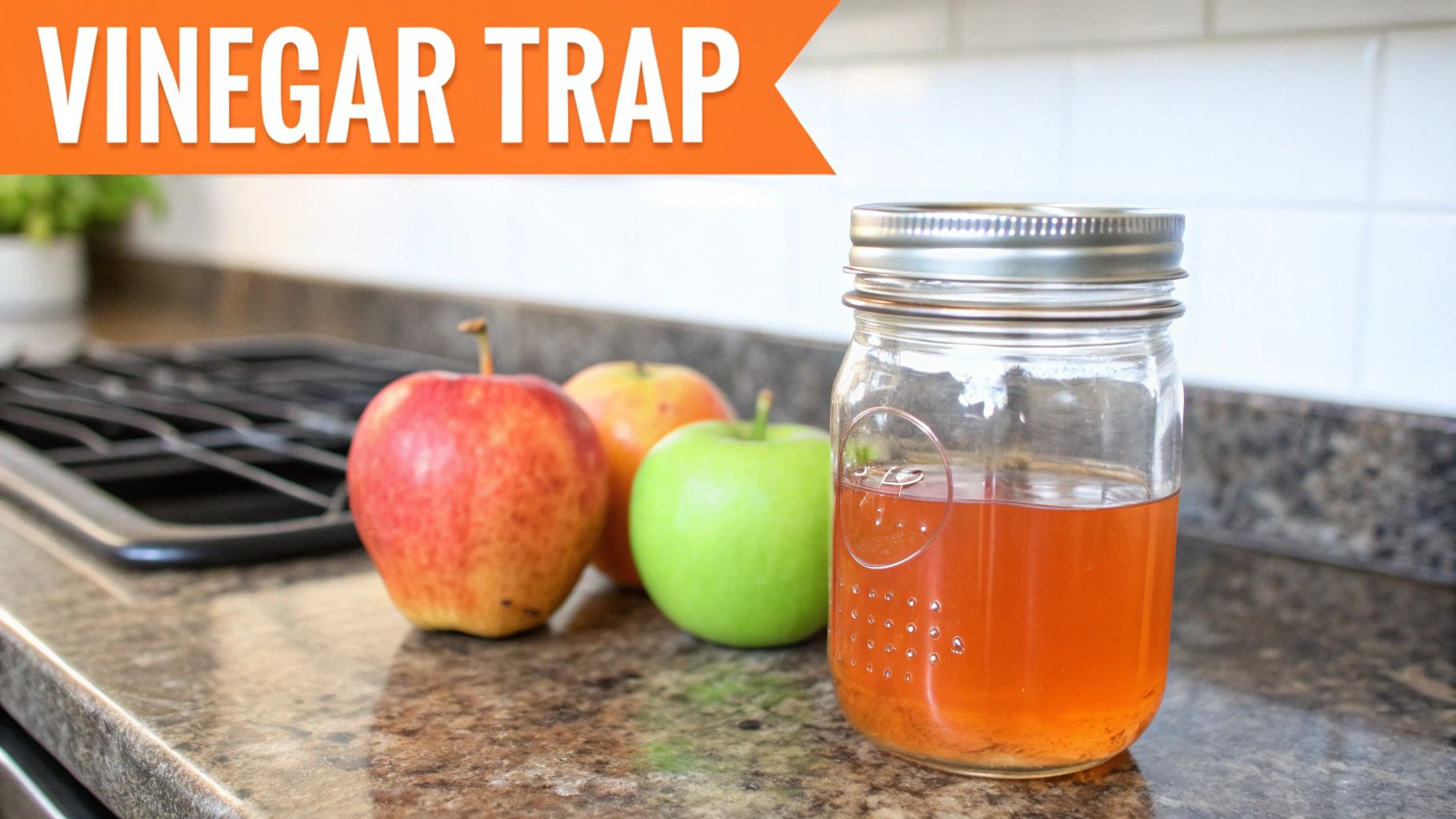
There's a reason this DIY trap is a go-to for homeowners everywhere—it just works. Fruit flies, in particular, are drawn to the smell of fermentation, and to them, apple cider vinegar smells like a five-star meal of rotting fruit.
Here’s how to whip one up in about 30 seconds:
- Pour about an inch of apple cider vinegar into a jar or a small bowl.
- Add a single drop of dish soap. This is the secret ingredient; it breaks the vinegar's surface tension, so when flies land to take a sip, they sink and can't fly away.
- Cover the container with plastic wrap and poke a few small holes in it. Flies can easily find their way in, but they aren't smart enough to figure out how to get back out.
Set these little traps near fly hotspots like your fruit bowl, sink drain, or trash can. You'll be amazed at how quickly it starts collecting victims. For more non-toxic pest control ideas, check out our guide on homemade insect killers for your home.
DIY Fly Trap Comparison
Not all traps are created equal. Here’s a quick rundown of some popular DIY options to help you choose the best one for your situation.
| Trap Type | Effectiveness | Materials Needed | Best Placement |
|---|---|---|---|
| Vinegar & Dish Soap | High (especially for fruit flies) | Apple cider vinegar, dish soap, jar, plastic wrap | Near fruit bowls, sinks, trash cans |
| Wine or Beer Bottle | Medium-High | Leftover red wine or beer in a bottle | On countertops, near recycling bins |
| Sugar Water & Yeast | Medium | Sugar, water, active yeast, plastic bottle | Anywhere flies congregate |
| Overripe Fruit Mash | Medium | Mashed banana or other fruit, bowl, plastic wrap | Near compost bins or fruit storage |
While the vinegar trap is a solid all-around choice, experimenting with different baits can help you figure out what the specific flies in your home are most attracted to.
Keep in mind that a few flies are an annoyance, but a constant swarm points to a bigger problem. If you’re emptying your DIY traps every day and still seeing more flies, it's a huge red flag that there's a breeding source you haven't found. When home remedies just can't keep up, Call +1 855 224 3071 for a professional assessment.
Flies aren't just a nuisance; they're a significant issue, costing the U.S. up to $1 billion annually through health impacts and control measures. Integrated strategies that start with simple sanitation and trapping are proven to be the most effective, reducing the need for more aggressive interventions down the line. You can learn more about these effective integrated pest control methods.
When to Call a Professional for Help
Sometimes, DIY solutions just don’t cut it. You’ve scrubbed every surface, sealed every crack, and set out a small army of traps, yet the flies keep coming back.
If that sounds familiar, it's a huge sign the problem is bigger than what you can see. A stubborn fly issue almost always points to a hidden, large-scale breeding ground you can't get to on your own. When you've done everything right and are still losing the battle, it's time to call for backup. For professional help, you can always Call +1 855 224 3071.
Continuing to fight a losing battle only gives the infestation more time to grow, making the real source even harder to eliminate.
Signs of a Deeper Infestation
Knowing when to wave the white flag is key. Look out for these undeniable red flags that mean you need a professional, fast:
- You Find Maggots: This is the big one. Discovering larvae confirms active breeding is happening inside your home. It’s likely in a hard-to-reach spot like a wall void, under a floorboard, or in some decaying matter you can't access.
- The Flies Return Seasonally: If you’re dealing with cluster flies or face flies that reappear in the same spot every single year like clockwork, you have an established, structural issue. Pros can treat the exterior of your home to finally break that cycle.
- The Sheer Number Is Overwhelming: Is your kitchen constantly buzzing with dozens of flies? Are your traps filling up within hours of setting them? If so, the infestation has already hit a critical point that home remedies can't handle.
A real pest control expert does more than just spray. Their first step is identifying the exact fly species you have, which is critical. Why? Because the strategy for drain flies is completely different from the plan for fruit flies. To learn more, check out our guide on whether pest control can get rid of fruit flies.
When you're facing a stubborn infestation, the fastest way to reclaim your kitchen is to bring in an expert. They have the tools and knowledge to find and eliminate the source for good.
If any of this sounds like your current situation, don’t wait for the problem to get worse. Call +1 855 224 3071 for an immediate, effective solution.
Your Kitchen Fly Questions, Answered
You might think a fly is just a fly, but the tiny gnat hovering over your bananas is a totally different beast than the fat housefly buzzing at the window. Knowing your enemy is half the battle. Let's clear up some of the most common questions homeowners have when they’re trying to take back their kitchen.
Each answer gives you a quick, no-nonsense solution you can use right away.
Why Did So Many Flies Suddenly Appear in My Kitchen?
A sudden fly explosion almost always points to one thing: a new, undiscovered breeding ground. This isn't a random invasion from outside. It’s a sign that a single fly found the perfect spot to lay her eggs about a week ago.
Common culprits I've seen over the years include:
- A forgotten potato or onion that’s gone soft and rotten in the back of the pantry.
- A small, sticky puddle of juice or milk that dripped under the fridge.
- A clogged sink drain where old food particles are quietly decaying.
A single female housefly can lay over 100 eggs at a time, and those eggs can mature into adult flies in just a week. Your first mission is a full-on hunt for any decaying organic matter. If you've searched everywhere and still can't find the source, it's time for backup. Call +1 855 224 3071 for professional help.
Are Electronic Fly Zappers Safe to Use in the Kitchen?
Honestly, electronic zappers are a terrible idea for kitchens. While they definitely kill flies, the way they do it is messy and seriously unsanitary.
When a fly hits the electric grid, it essentially explodes. This creates a fine mist of insect parts, germs, and whatever filth that fly was carrying. This "fly aerosol" can easily settle on your food, your countertops, and your clean dishes.
You're much better off using traps that actually contain the dead flies, like sticky paper or liquid bait traps. If your fly problem is so bad that you’re even thinking about a zapper, it’s a huge red flag that you need a more thorough solution. For safer and more effective options, Call +1 855 224 3071.
What’s the Fastest Way to Get Rid of Fruit Flies?
Fruit flies are specialists. They're drawn specifically to the smell of fermenting sugars, not just any old garbage. The quickest way to knock them down is with a targeted apple cider vinegar trap.
Just pour about an inch of apple cider vinegar into a small jar, add a single drop of dish soap (this breaks the surface tension), and cover the top with plastic wrap. Poke a few small holes in the plastic with a toothpick. The flies get lured in by the sweet, fermented scent but become trapped by the soap and can't fly out.
But remember, the trap is only half the solution. You must get rid of their food source by tossing out any overripe produce and giving your drains a thorough cleaning.
When DIY tricks just aren't cutting it against a stubborn infestation, Pest Control Service Finder is here to connect you with local experts who can wipe out the problem for good. For an immediate, no-obligation quote, visit https://pestcontrol-service-finder.com.