
Hear Scratching? Your Guide to Removing Mice in the Walls

You hear a noise. It must be the wind. Or maybe the pipes. It will go away.
But it doesn't. That faint scratching is a sign. It is not the house settling. It is a sign of mice in the walls, and ignoring it is a big mistake. If you want a fast answer, Call +1 855 224 3071 for a professional opinion.
If those little sounds are starting to feel familiar, it’s time to find out for sure if you have mice in your walls.
That Scratching Is Not Just Your House Settling
Look, every house creaks and pops. It’s totally normal for a home to expand and contract with the temperature. You’ll hear random groans and thumps, especially in older homes or those undergoing serious structural work like underpinning.
But mice make very different, very distinct sounds. Their activity isn't a random pop—it's purposeful movement. Learning to tell the difference is your first step to getting control of the situation before it gets out of hand.
If you even suspect it's more than just the house settling, don't wait. For a professional opinion right now, Call +1 855 224 3071 and get a straight answer.
The True Signs of Mice in Your Walls
So, how can you be sure? A house settling is a deep groan or a sudden pop. Mice, on the other hand, are active and create specific noises that are hard to mistake once you know what you’re listening for.
Here are the dead giveaways you should never ignore:
- Scratching or Scurrying: This is the classic sound. It’s a light, frantic scratching, often heard late at night when the house is quiet and they feel safe to move around.
- Faint Squeaking: You might catch high-pitched chirps or squeaks. That’s the mice communicating with each other inside the wall voids.
- Gnawing Sounds: Mice have to chew constantly to keep their teeth filed down. This creates a distinct, repetitive gnawing or scraping sound on wood studs, drywall, or even electrical wiring.
A persistent, localized scratching noise is the number one indicator that you have mice in the walls. Unlike the random creaks of a settling house, these sounds often follow a pattern as rodents move along their established pathways.
To help you pinpoint the problem, here's a quick rundown of the signs and what they mean.
Quick Guide to Identifying Mice in Walls
| Symptom | What It Means | Action to Take |
|---|---|---|
| Scratching/Scurrying | This is the most common sign of active movement within walls or ceilings, usually at night. | Try to pinpoint the location of the sound. Check the area for droppings or entry points. |
| Faint Squeaking | Indicates communication between multiple mice, suggesting a nest or a family group. | Listen closely to identify the area with the most activity. This could be near a food or water source. |
| Gnawing/Chewing | Mice are chewing on materials like wood, pipes, or wires, which is a serious fire hazard. | Immediately inspect the area for damage. Pay close attention to electrical wiring. |
| Strange Odors | A stale, ammonia-like smell (from urine) points to an established nest and a growing infestation. | The smell will be strongest near the nest. This is a critical area to target for removal efforts. |
These symptoms are clear indicators of a problem that needs to be addressed sooner rather than later.
Each year, rodents like mice invade an estimated 21 million homes across the United States. Most of these invasions happen in the fall and winter as they desperately search for warmth and food. Your home could easily be one of them.
If these signs are hitting a little too close to home, get a fast assessment of your situation. Call +1 855 224 3071 today.
How to Confirm You Have Mice in Your Walls
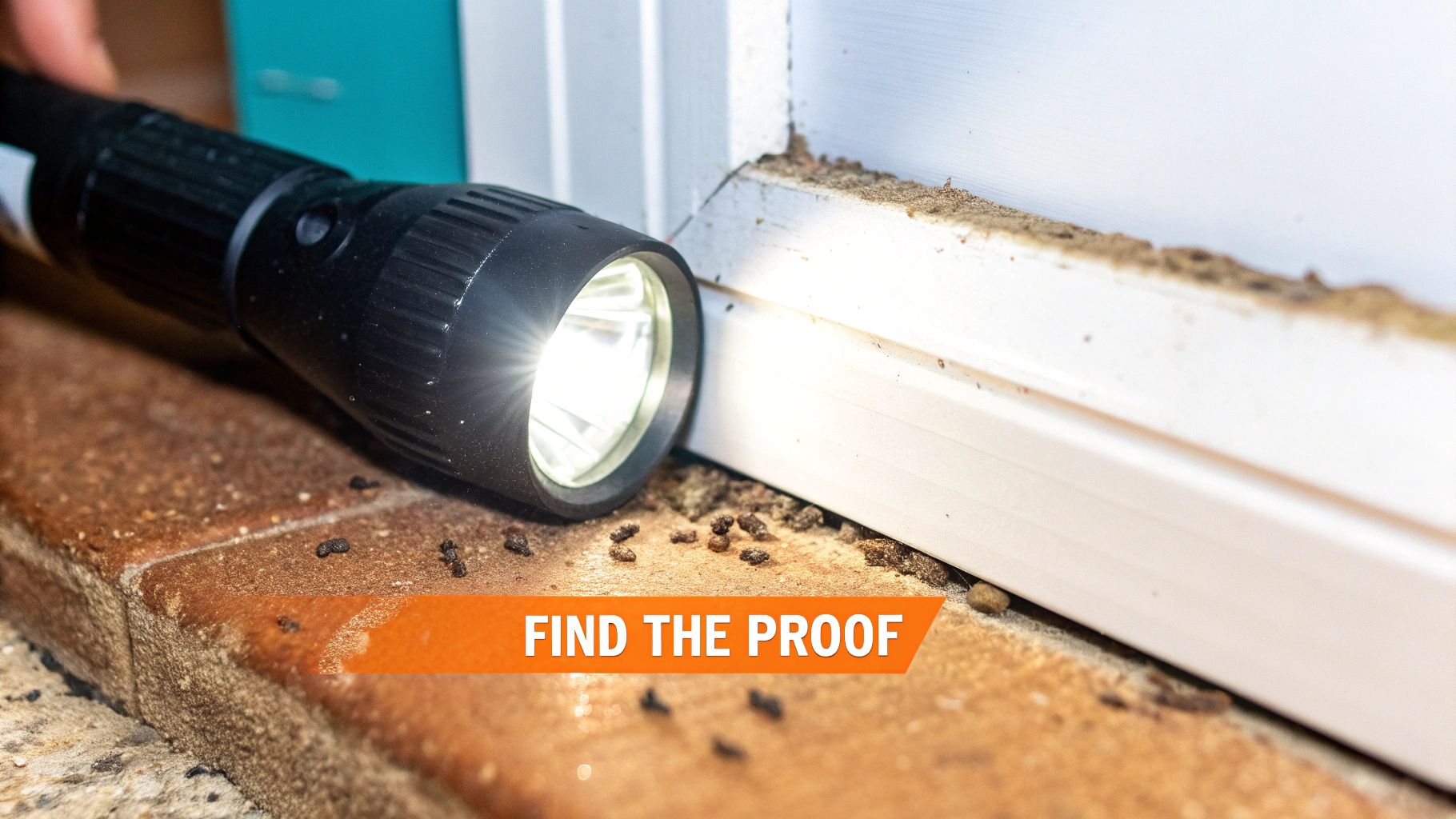
That scratching sound from inside the drywall is your first clue, but you need undeniable proof before you start ripping things apart or calling for help. The good news is that confirming a mouse problem doesn't require tearing down your walls—it just takes a little detective work.
You don't need any fancy gear for this. Your most powerful tools are a bright flashlight and your own senses. Mice are creatures of habit, and they leave a trail of evidence as they travel from their hidden nests to find food. Your job is to follow that trail.
If you want a trained eye to handle the inspection, Call +1 855 224 3071 for a professional opinion.
Finding the Physical Evidence
Mice are messy. The surest way to know you have an infestation is to find the physical proof they can't hide. Start your search in the quiet, undisturbed parts of your home where they feel safest.
Grab your flashlight and focus on these hotspots:
- Attics and Crawl Spaces: Check along the room's edges and on top of insulation batts. These are prime nesting locations.
- Basements and Utility Rooms: Look in the corners, along the base of the foundation, and around your water heater or furnace.
- Behind Appliances: Carefully pull out your refrigerator and stove. The combination of warmth and dropped crumbs makes these areas a five-star resort for mice.
In these spots, you're looking for the specific calling cards that scream "mouse."
What to Look For
While you're inspecting these areas, keep an eye out for three definitive signs. Finding just one of these pretty much confirms your suspicions.
1. Mouse Droppings
This is the classic, undeniable sign. Mouse droppings are tiny, dark, and shaped like grains of rice, usually 1/8 to 1/4 inch long. If they look dark and shiny, they're fresh. Older droppings are dull, gray, and crumbly. A large pile of them points you right to a high-traffic area.
2. Gnaw Marks and Damage
Mice have to chew constantly to keep their teeth filed down. You'll see their work as small, paired gnaw marks on wood baseboards, drywall, and plastic pipes under the sink. Pay special attention to electrical wiring—chewed wires aren't just evidence, they're a serious fire hazard that needs immediate attention.
Mice can squeeze through openings as small as a dime. Pay close attention to gaps around utility pipes, vents, and foundation cracks. These are the superhighways mice use to get inside your walls in the first place.
3. Nests and Musty Odors
An established infestation creates a distinct, stale smell, kind of like ammonia. The odor comes from their urine and is always strongest near the nest. The nests themselves are often made of shredded paper, insulation, fabric, or anything soft they can find, usually tucked into a dark, hidden corner.
If you've spotted any of these signs, it's time to act. This is one problem that will not solve itself. For immediate assistance and to discuss what you've found, Call +1 855 224 3071.
Safe and Effective DIY Mouse Removal Techniques
Forget what the cartoons taught you. That classic wooden snap trap with a hunk of cheese is practically a myth. In the real world, mice are wary, often ignore cheese, and frankly, there are much smarter—and safer—ways to handle them in a modern home.
Getting mice out of your walls requires a solid plan, especially if you have curious kids or pets running around. Your goal is to get rid of the pests without turning your own home into a danger zone.
If you're feeling overwhelmed by the options, a quick chat with an expert can clear things up. Call +1 855 224 3071 to talk through some safe strategies.
Choosing the Right Tools for the Job
First things first, you need the right trap. While a traditional snap trap can work, it’s also a potential hazard for little fingers and paws. Luckily, the market is full of better, safer designs built for family homes.
Here's a quick rundown of your best bets:
- Electronic Traps: These are brilliant. A mouse is lured into a self-contained chamber, and once it steps on a metal plate, it receives a quick, humane electric shock. Since they're fully enclosed, they’re a top choice for homes with kids and non-rodent pets.
- Covered Snap Traps: Think of these as the next generation of the old wooden trap. The snapping part is hidden inside a plastic box. A mouse has to go in through a small hole to get the bait, which keeps fingers and paws safely out of the way.
- Catch-and-Release Traps: If you can't stomach the idea of killing them, these traps catch the mouse alive inside a small container. The key here is to release it far, far away from your house—at least a mile is the general rule of thumb.
If you’re dealing with this, you’re definitely not alone. Mice are one of America's most common household pests, with recent studies showing they sneak into 29% of U.S. homes.
Strategic Placement Is Everything
Where you put the trap is just as critical as which one you choose. Placing a trap in the middle of a room is a rookie mistake and almost never works. Mice are creatures of habit and prefer to scurry along walls and baseboards where they feel hidden and safe.
Pro Tip: Mice use their whiskers to feel their way along walls. For this reason, you should always place traps perpendicular to the wall, with the bait end facing the baseboard. This puts the trap directly in their natural travel path.
You have to think like a mouse. Search for the tell-tale signs like droppings and gnaw marks—these are their superhighways. Set your traps in these high-traffic spots: behind the fridge, under the kitchen sink, in the dark corners of your pantry, and along the walls of your attic or basement.
For help finding these spots or for professional removal services, you can always Call +1 855 224 3071.
Comparing Child-Safe and Pet-Safe Mouse Traps
Picking the perfect trap really comes down to balancing safety, effectiveness, and how much you want to deal with the aftermath. This table breaks down the most common family-friendly options.
| Trap Type | Safety Level (Pets/Kids) | Effectiveness | Best Use Case |
|---|---|---|---|
| Electronic Traps | High | Very Effective | Ideal for anyone who wants a fast, humane kill without having to see the pest. Perfect for indoor use. |
| Covered Snap Traps | Medium-High | Effective | A great budget-friendly choice that adds a much-needed layer of safety over the classic snap trap design. |
| Catch-and-Release | Very High | Moderately Effective | Best for people who prefer a no-kill method and don't mind handling the live release process. |
At the end of the day, no matter which trap you pick, consistency is what gets results. You have to check your traps daily and reset them right away. If the problem feels like it’s getting bigger instead of smaller, don't wait. Getting a professional opinion can save you a lot of headaches.
Call +1 855 224 3071 for immediate help.
How to Stop Mice from Coming Back
Getting rid of the mice you already have is just the first battle. Winning the war against mice in the walls means making absolutely sure they can never get back inside. This is where the real, lasting work begins—turning your home into a fortress they can't breach.
This might sound like a huge undertaking, but it’s more about being detail-oriented than anything else. You have to start thinking like a mouse, which means no crack or gap is too small to be a problem. A mouse can literally flatten its body and squeeze through an opening the size of a dime.
If you’ve sealed everything you can find but still hear scratching, it's time to let a professional find the hidden entry points you missed. For immediate help, Call +1 855 224 3071.
Building Your Fortress: A Home Inspection
Your first move is a full-blown inspection of your home’s exterior. Grab a good flashlight, get on your hands and knees if you have to, and walk the entire perimeter. You’re looking for any potential entry point, from the foundation right up to the roofline.
Pay extra close attention to these common weak spots:
- Utility Penetrations: Check where pipes for gas, water, and electrical lines enter your home. The gaps around these are basically rodent superhighways.
- Foundation Vents: Make sure any vents are covered with a sturdy metal mesh that mice can’t chew through. Plastic or fiberglass won't cut it.
- Siding and Trim: Look for cracks or gaps, especially at corners and where different materials meet, like where your siding meets the foundation.
This whole prevention process is a simple loop: inspect for weak spots, seal them up tight, and maintain your defenses.
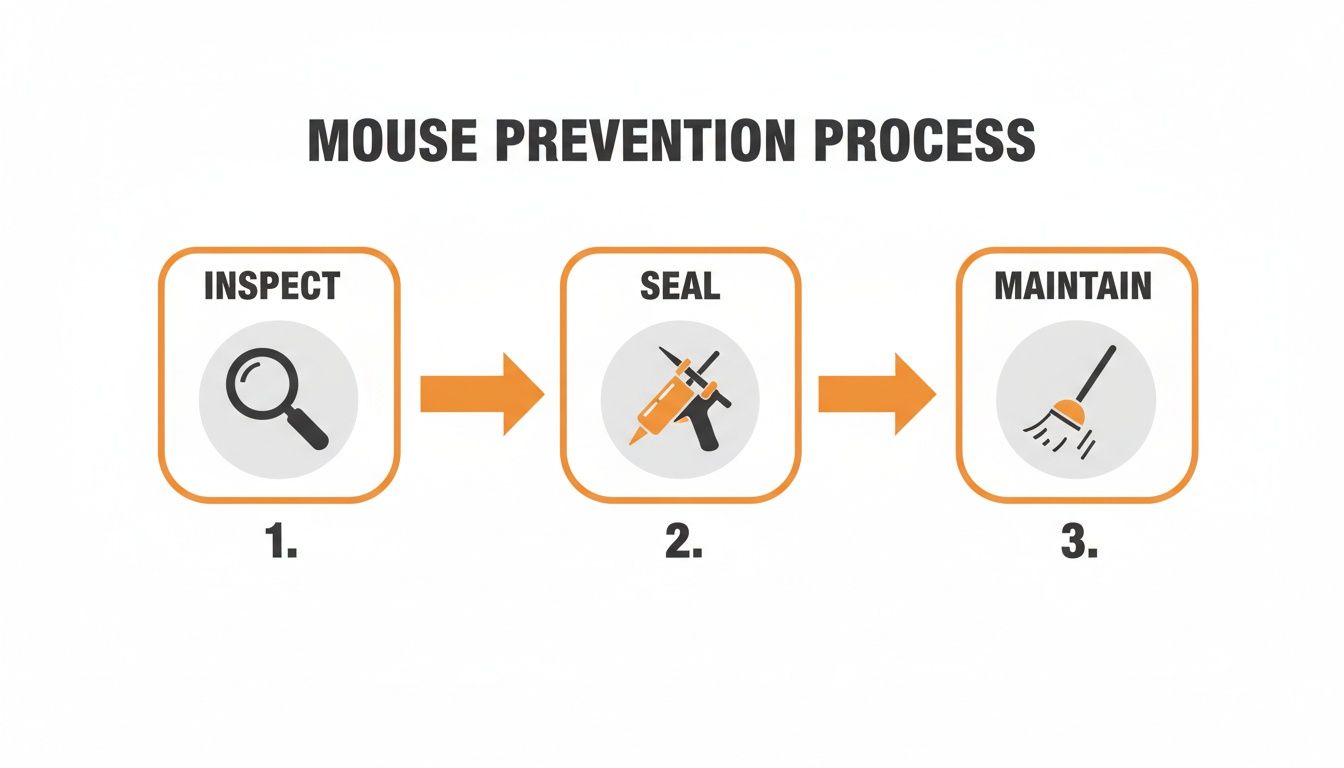
This visual guide nails the cycle. It's a constant process of checking for vulnerabilities, sealing them properly, and keeping your property clean to make it completely unappealing to pests.
Sealing Gaps the Right Way
Once you’ve mapped out all the entry points, you need to seal them with materials mice can't defeat. Don't even think about using spray foam, wood putty, or caulk alone; a determined mouse will chew right through those soft materials overnight.
Your best weapons for this job are:
- Steel Wool: This is a fantastic gap-filler because mice absolutely hate chewing on it. The coarse, sharp texture tears up their gums and teeth.
- Caulk: After stuffing a crack with steel wool, seal right over it with a high-quality silicone caulk. This locks the wool in place and creates a permanent, airtight barrier.
- Hardware Cloth: For larger openings like vents or holes under the deck, this sturdy wire mesh is the only reliable solution.
Pro Tip: The combination of steel wool and caulk is one of the most effective and affordable ways to seal small- to medium-sized gaps. It creates a durable, chew-proof plug that will last for years.
For a broader look at securing your home's perimeter, which doubles as fantastic pest prevention, you might find a guide for exterior home repairs helpful.
Final Touches for Long-Term Prevention
Unfortunately, this problem is only getting worse. Rodent activity has surged across the country, with some areas seeing massive increases. The U.S. Midwest, for example, saw a staggering 76% year-over-year increase, with states like Ohio and Indiana reporting even higher numbers.
Beyond just sealing holes, you need to make your entire property less inviting. That means tidying up the yard, keeping firewood stacked well away from the house, and making sure your trash cans have tight-fitting lids. To speak with customer service about prevention, Call +1 855 224 3071.
If this all feels overwhelming, or if the mice just keep coming back, you don’t have to fight this alone. A professional exterminator can find and seal every last entry point with expert precision. For a solution that lasts, Call +1 855 224 3071 and get it done right the first time.
When to Call a Professional for Mice in Walls
Look, I get it. The DIY mindset is strong. A quick YouTube search and a run to the hardware store can solve most household problems, right? But mice in the walls? That's a different beast entirely.
Trying to tackle a hidden infestation on your own can quickly turn a small nuisance into a costly, dangerous mess. The real trick is knowing when you’ve crossed the line from a manageable problem to a full-blown crisis that needs an expert.
Setting a few traps is one thing. But some situations are clear signals that you're outmatched. If you're not sure where you stand, a quick consultation can clear things up. For an immediate assessment, Call +1 855 224 3071 and talk to an expert.
Red Flags You Cannot Ignore
Certain signs are more than just an annoyance—they're warnings that your mouse problem is well-established and growing out of control inside your home's structure. Ignoring these is a recipe for serious trouble.
Here are the critical signals that scream "call a professional":
- Seeing Mice During the Day: Mice are nocturnal. If you spot them scurrying around when the sun is out, it’s a bad sign. It often means the nests are so overcrowded that mice are being forced out to find food when they’d normally be hiding. This points to a massive population.
- You Keep Trapping, But They Keep Coming: You’ve set traps and you’re catching mice, but the scratching and scurrying sounds just don’t stop. This means you’re only skimming the surface, catching the overflow while the core colony breeds and thrives just out of reach.
- Finding Chewed Electrical Wires: This is the most dangerous red flag. Gnawed wiring is a top cause of house fires started by pests. If you find any evidence of this, you need an expert to assess the full extent of the damage immediately. It's a non-negotiable safety hazard.
A strong, persistent ammonia-like smell is another huge indicator. That pungent odor is from a large buildup of mouse urine. It tells you a significant nest is hidden somewhere nearby—a problem DIY methods almost never solve.
The Professional Advantage
Calling in a pro isn't giving up; it's making a smart move to protect your home and your family's health. Pest control technicians have the training, experience, and gear to solve problems that are simply beyond the scope of DIY methods.
Here's what they bring to the table:
- Advanced Tools: Pros use equipment like endoscopes (tiny cameras) and moisture meters to pinpoint nests inside walls without having to tear your drywall apart just to look.
- Targeted, Safer Treatments: They know mouse behavior inside and out. They use commercial-grade, tamper-resistant bait stations and place them in strategic locations you'd never think of, ensuring the treatment is effective while keeping kids and pets safe.
- Comprehensive Exclusion: An expert won't just kill the mice; they’ll find and seal every single entry point, even the tiny cracks and gaps you'd easily miss. This comprehensive approach is the only way to get a permanent solution.
Bottom line: if the problem feels overwhelming or the red flags are piling up, don't wait. A small investment in a professional service now can save you from thousands of dollars in repairs and a whole lot of stress down the road.
For immediate, reliable help with mice in the walls, Call +1 855 224 3071.
Common Questions About Mice in Walls
It's a common thought: if I just ignore the scratching, maybe they'll get bored and leave. I wish it were true. It almost never is.
Once mice find a warm, insulated, and predator-free highway system inside your walls, they have zero reason to move out. They'll do the opposite: they'll settle in, start breeding, and turn a couple of unwanted guests into a full-blown infestation that can damage wiring and insulation.
Facing a persistent problem? Don't let it spiral out of control. For fast, effective help from a local expert, Call +1 855 224 3071 today.
Can Mice in the Walls Go Away on Their Own?
This is extremely unlikely. Mice are driven by the most basic survival instincts: they need shelter, food, and water. Your walls provide the perfect, protected shelter, and the rest of your home is an all-you-can-eat buffet. Why would they leave?
Here's the scary part: once a pair of mice establishes a nest, they reproduce at a shocking rate. A single female mouse can have 5 to 10 litters a year, each with a handful of pups. Ignoring the problem means you're basically letting a colony grow exponentially inside your home's structure.
That scratching and scurrying isn't the sound of them "passing through." It's the sound of them building a permanent home.
What Is the Fastest Way to Get Rid of Mice in Walls?
The fastest way is a two-pronged attack: aggressive trapping combined with immediately sealing off every possible entry point. I'm not talking about one or two traps. You need to set multiple traps along their known travel routes—think basements, attics, and behind appliances where they feel safe.
At the same time, you have to find and block every single crack they're using to get inside. Stuffing gaps with steel wool and sealing them with caulk is a must.
But for a serious infestation? The absolute fastest solution is calling a professional. They have the experience and commercial-grade tools to solve the problem in a fraction of the time it takes for DIY methods. For immediate help, Call +1 855 224 3071.
What Does a Mouse Infestation Smell Like?
An active mouse problem has a very distinct, foul odor. It’s a stale, musky smell that’s often compared to ammonia. That powerful scent comes directly from their urine, which they constantly leave behind to mark their territory.
You'll notice the smell is strongest in enclosed areas with bad ventilation—inside kitchen cabinets, under the sink, or in closets near the walls where they're nesting. If you smell that, it's a clear signal you have an established colony that needs to be dealt with right away.
Is Using Poison for Mice in Walls a Good Idea?
I strongly advise against using poison for mice inside your home. It seems like an easy fix, but it almost always creates a much bigger, more disgusting problem down the road.
A poisoned mouse rarely dies out in the open where you can find it. Instead, it will crawl back into its nest deep inside a wall void to die. This leads to an absolutely horrific decomposition smell that can linger for weeks, sometimes months. The only way to get rid of the carcass is to cut a hole in your drywall, which means costly repairs.
On top of that, poison baits pose a serious risk to children, pets, and other wildlife. Trapping is a much safer, more controlled, and ultimately more effective approach for homeowners.
If you're tired of the sounds, smells, and stress of having mice in your walls, Pest Control Service Finder can connect you with the right help. We find local, vetted professionals who will solve your rodent problem for good. Don't let a small issue become a massive headache—reclaim your home today. Find an exterminator near you.