Your Guide to Pest Control 24 Hour Services
Pests only come out at night. Wrong. They are always there. They just hide during the day. This is the real problem.
That noise in the wall is not the house settling. It’s a pest. That shadow in the kitchen was not a trick of the light. It was real. Ignoring these signs is a mistake. Pests don't wait for business hours. They are busiest while you sleep. They damage your home. They breed. A small problem at 2 AM becomes a huge one by morning. If you see something, do not wait. Call +1 855 224 3071 immediately.
Why That Noise In The Wall Can’t Wait
Here’s the hard truth: pests don't keep business hours. While you're asleep, they’re often at their busiest—foraging for food, breeding new generations, and quietly causing damage to your home. What feels like a tiny annoyance at 2 AM can explode into a full-blown infestation by sunrise.
Seeing a single cockroach is almost never a good sign; it's usually a scout for a hidden colony of hundreds. Likewise, one mouse is rarely just one mouse. It's more likely the advance guard for a family that’s already taken up residence in your insulation or started chewing on electrical wires—a serious fire hazard that most people don't even consider.
A delayed response is a pest's best friend. A problem that seems small at midnight can become exponentially worse by the time you've had your morning coffee, leading to more property damage and a much higher bill to fix it.
The Myth of "Minor" Pest Problems
It's tempting to downplay what you see. A small trail of ants seems like something a store-bought trap can handle, and a few spiders are just part of life, right? This kind of thinking completely misses the real issue: the pests you actually see are just the tip of the iceberg. Ignoring them gives the hidden population the one thing it needs most—time to multiply and dig in deeper.
This is exactly why pest control 24 hour services exist. Getting a professional out immediately breaks the pest's breeding and expansion cycle before it can spiral. Waiting even a day or two for a standard appointment can be the difference between a quick, simple treatment and a costly, multi-visit extermination.
Think about these all-too-common late-night discoveries:
- A bat flitting around the living room: This is an immediate health risk (think rabies) and a sure sign you have a hole somewhere leading to your attic or chimney.
- A buzzing wasp nest right by your front door: This is a direct threat to anyone coming or going, especially kids or people with allergies.
- Finding a live bed bug on your mattress: This requires immediate, decisive action to stop them from spreading to every room in the house.
Each of these situations is an emergency that needs a professional, and fast. If you're facing something that feels unsafe or just plain overwhelming, don't wait. Call +1 855 224 3071 for immediate help, day or night.
Figure Out If You Have a Real Pest Emergency
Finding a pest in your home late at night sends most people straight into panic mode. But your best weapon in that moment is a clear head. Before you do anything else, take a breath and try to size up the problem. You don't need to be an entomologist—you just need enough info to make the right call.
The goal here is simple: are you dealing with a minor nuisance or a true, drop-everything emergency? A single silverfish in the bathtub is annoying, but it can wait. A steady stream of ants pouring out of a power outlet? That's a different story. It signals a large, hidden colony and needs a much faster response.
Identify The Pest And Where It’s Coming From
First things first, if you can do it from a safe distance, try to figure out what you're up against. Snapping a quick photo with your phone can be incredibly helpful when you call a professional. Are you looking at a spider, a roach, or something you can't even name?
Next, pinpoint the center of the activity. Is it just in one spot, like under the kitchen sink, or are you seeing signs in multiple rooms? The more places you see them, the more urgent the problem. Numbers matter, too. One or two bugs could just be random intruders. Dozens are a clear sign of an active infestation that needs a pest control 24 hour service right away.
If you're unsure what you're seeing, give us a call at +1 855 224 3071 and describe the situation. Our customer service team can often help you figure it out over the phone.
The flowchart below breaks down the decision-making process. Whether you hear strange noises, see pests directly, or find damage, it's time to act.
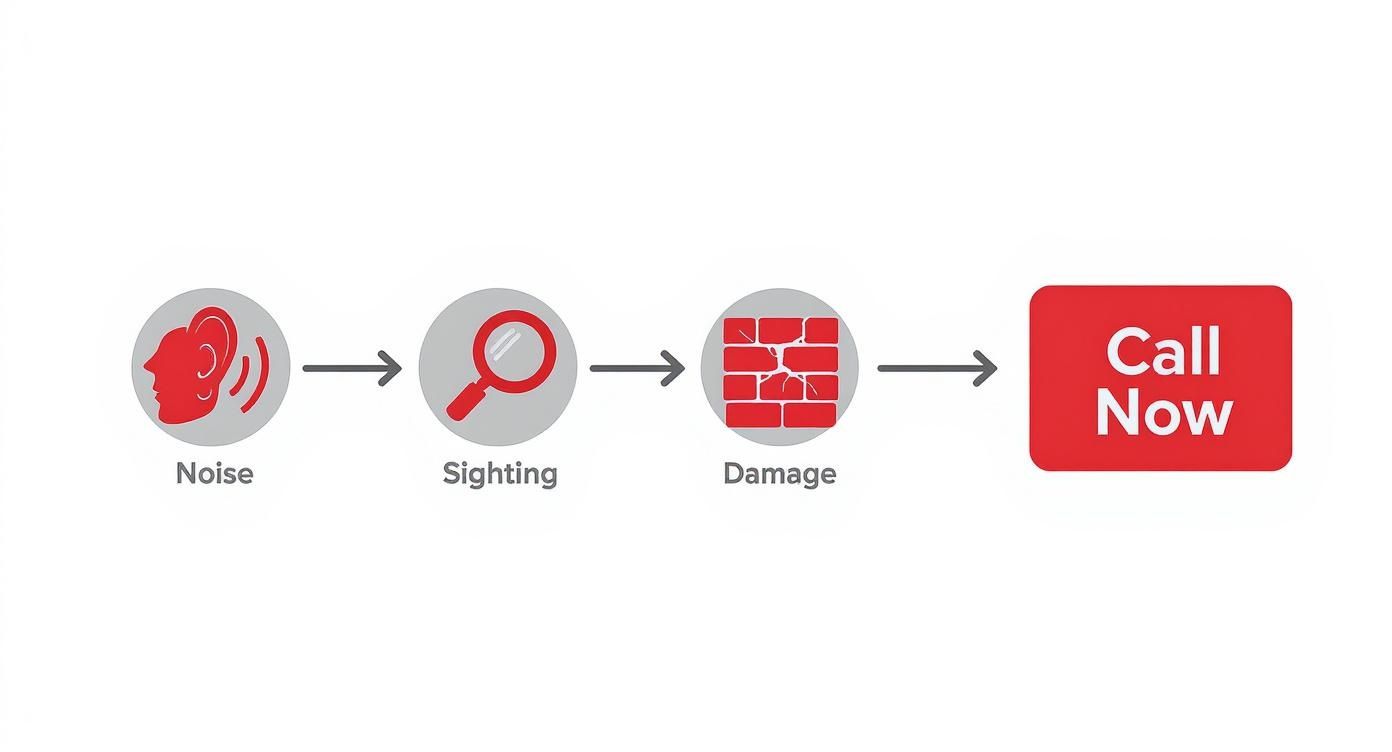
This visual guide makes it clear: any of these signs—from scratching in the walls to visible damage—is a strong signal that you need professional help immediately.
What’s the Threat Level?
Once you know the what, where, and how many, you can determine how urgently you need to act. Not every pest problem is a middle-of-the-night crisis. Some can absolutely wait until morning. Knowing the difference saves you from overreacting.
Pests that pose a direct risk to your health and safety should always be your top priority. These are the non-negotiables:
- Venomous pests like black widow or brown recluse spiders.
- Stinging insects, especially wasps or bees building a nest near a door or window.
- Rodents, which can spread disease and chew through electrical wiring, creating a fire hazard.
- Bed bugs, because they spread so quickly and are notoriously difficult to eliminate.
A pest situation is an emergency if it poses an immediate risk to health, safety, or property. This includes venomous creatures, aggressive stinging insects, large-scale infestations, and pests like rodents that can cause structural or electrical damage.
If your problem falls into one of these high-risk categories, waiting isn't an option. It's time to call a pest control 24 hour professional. A fast response can stop a dangerous situation from escalating.
When in doubt, it's always better to consult an expert. A quick call to a service like +1 855 224 3071 can give you a professional opinion on how serious your situation is.
To help you sort it out, I've put together a simple matrix. It's designed to help you quickly classify the severity of your pest problem and decide what to do next.
Pest Emergency Urgency Matrix
Use this table to quickly assess whether your pest situation is a low, medium, or high-urgency emergency.
| Pest Sighting | Potential Risk | Urgency Level | Recommended Action |
|---|---|---|---|
| A few ants on the kitchen counter. | Low. Minimal immediate threat. | Low | Set store-bought traps and monitor. Schedule a routine appointment if they persist. |
| A mouse scurries across the floor. | Property damage (wiring), disease transmission. | Medium | Set traps. Call for a professional inspection within the next business day. |
| A bat is flying inside your living room. | Rabies risk, potential entry point to home. | High | Isolate the room. Do not approach. Call +1 855 224 3071 for immediate dispatch. |
| A wasp nest is forming near a main entrance. | High risk of stings, allergic reactions. | High | Avoid the area. Keep children and pets away. Call a pest control 24 hour service now. |
This framework isn't exhaustive, but it gives you a solid starting point for making a smart, calm decision when pests show up uninvited.
Immediate Safety Steps While You Wait for Help
You've made the call. The pros are on their way. Now what?
It's easy to feel a bit helpless in that time between hanging up the phone and the technician knocking on your door, but this is a critical window. The simple steps you take right now can keep your family safe, stop the problem from spreading, and even make the professional's job easier and faster once they arrive.
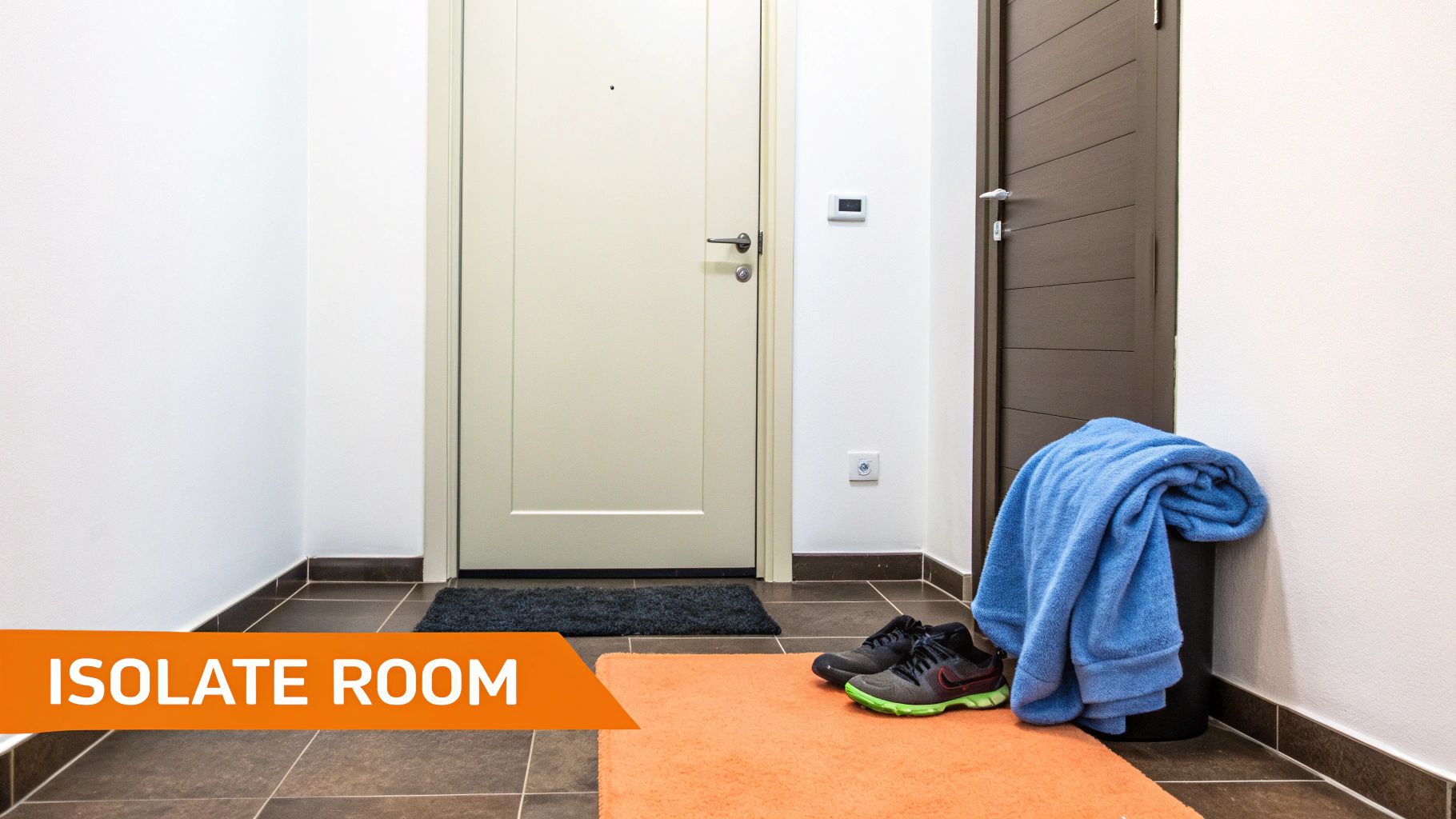
Think of it as creating a safe holding pattern. Your goal is simple: contain the situation until the pest control 24 hour expert takes over.
Isolate and Secure the Area
First things first: limit the pest's movement. If you've tracked the activity to a single room—like the bathroom where you saw a scorpion or the bedroom with suspected bed bugs—shut it down.
Get everyone out of that room, including your pets, and close the door firmly. For an extra layer of security, roll up a towel and stuff it tightly under the door. It sounds almost too simple, but this one move blocks a major escape route for everything from mice to large insects.
If you’re not sure what to do, don't guess. Call +1 855 224 3071 and our customer service line can give you immediate guidance on securing the area.
Crucial Safety Note: Never corner a wild animal. If you're dealing with a raccoon, opossum, or bat, isolate the room but leave its potential exit (like an open window) clear. A cornered animal is a panicked animal, and that's when they can get aggressive. Your safety comes first, always.
Pest-Specific Do’s and Don’ts
How you should react depends entirely on what kind of pest you're up against. A one-size-fits-all approach is ineffective and can be flat-out dangerous.
Here are a few quick tips based on common emergencies:
- Stinging Insects (Wasps/Bees): Stay away. Do not get near the nest or try to knock it down with a broom. Just clear the area, shut nearby windows and doors, and wait. One wrong move can trigger an entire swarm.
- Rodents (Mice/Rats): After you've isolated the room, do a quick scan for any easy food sources. Pick up the dog's food bowl, clear crumbs off a counter. Don't give them a reason to stick around.
- Wildlife (Bats/Raccoons): Again, keep your distance. Close off interior doors leading into that part of the house and just wait for a trained specialist.
- Cockroaches/Ants: Resist the urge to grab a can of bug spray. Over-the-counter insecticides often just scatter the pests, making it much harder for the technician to find and treat the core of the colony.
Taking these immediate steps is about more than just safety—it's about preventing costly damage. Termites alone are responsible for over $5 billion in property damage in the U.S. each year. That staggering number is a big reason why the commercial pest control market is valued at roughly $9.6 billion—people need fast, effective solutions.
What You Must Avoid Doing
Knowing what not to do is just as important as knowing what to do. Some gut reactions can actually make the situation much worse.
Absolutely Avoid:
- Using Harsh Chemicals: Don't set off foggers, "bug bombs," or spray powerful chemicals, especially in enclosed spaces. You can create a toxic breathing environment for your family and pets long before you kill any pests.
- Handling Pests Directly: Never try to touch, trap, or remove a pest yourself unless you are 100% certain what it is and that it's safe. This is exactly how bites, stings, and scratches happen.
- Blocking All Exits for Wildlife: While you want to contain a wild animal, make sure it has a clear path to get back outside if possible. This prevents it from panicking and causing more damage trying to find another way out.
Your job right now is to manage the scene safely until the cavalry arrives. For a deeper dive, check out our complete guide on emergency pest control.
And if you're ever in doubt, the smartest and safest thing you can do is Call +1 855 224 3071 and let an expert tell you exactly what to do next.
How to Find and Vet a Reputable 24 Hour Service
When you've got a pest crisis unfolding, your first instinct is probably to grab your phone, search for "pest control 24 hour," and call the first number you see. It seems like the fastest way to solve the problem, right?
But that split-second decision could easily lead to a much bigger headache. Not all emergency services are created equal, and in a moment of panic, it’s frighteningly easy to hire an unreliable, overpriced, or flat-out ineffective provider.
You need a quick way to separate the real pros from the fly-by-night outfits. Making the right choice under pressure isn't about luck—it's about knowing exactly what to ask. A truly reputable company will have clear, confident answers. For immediate access to our network of pre-screened local experts, you can always Call +1 855 224 3071.
Your Rapid-Vetting Checklist
When you get a potential company on the phone, don't just ask, "How soon can you get here?" You need to conduct a quick, effective interview. Their answers will tell you everything you need to know about their legitimacy and experience.
Key questions to ask immediately:
- "Are you licensed and insured to operate in my state?" This is non-negotiable. A firm "yes" protects you from liability if something goes wrong on your property. If they hesitate, dodge the question, or say no, hang up. End of call.
- "Can you describe your experience with [your specific pest]?" A generalist might struggle with a stubborn bat problem, while a specialist will know exactly what to do. You want a team that has handled your exact emergency before, not someone who's going to learn on your dime.
- "Do you offer a service guarantee?" A professional company stands by its work. Ask what happens if the pests come back within a certain timeframe. Most will offer a free re-treatment, and you want that peace of mind.
- "Can you give me a rough price estimate over the phone?" While they can't give a final quote without seeing the infestation, they should absolutely be able to provide a price range for an emergency call-out. Be extremely wary of anyone who is completely evasive about costs.
The most important thing a pest control 24 hour service can offer you over the phone is clarity. Clear answers about licensing, experience, guarantees, and pricing are the hallmarks of a trustworthy professional. Vague responses are a major red flag.
Information to Have Ready Before You Call
To get the most accurate help—and a faster dispatch—you need to provide clear information. The better you can describe the situation, the better prepared the technician will be when they show up at your door.
Before dialing +1 855 224 3071, try to have these details on hand:
- Type of Pest: Be as specific as possible. "Large, black spiders in the basement" is far more helpful than just "spiders." If you can't identify it, describe its appearance, size, and what it was doing.
- Location of Activity: Where exactly are you seeing the pests? Is it contained in the kitchen, swarming in the attic, or creeping along the baseboards in one bedroom?
- Severity and Numbers: Are you seeing one or two, or is it a steady stream? Have you found any physical evidence, like droppings, chewed wires, or weird smells?
- Safety Concerns: Always mention if you have children, pets, or family members with allergies or respiratory issues. This is critical information that helps the technician choose the safest possible treatment method for your household.
Having this information ready makes the call efficient and helps ensure the company sends the right person with the right equipment.
Spotting Red Flags and Making the Final Choice
Unfortunately, some companies prey on the panic of homeowners in an emergency. Learning to spot the warning signs can save you from a costly and frustrating mistake. If you encounter any of these issues, it's time to move on to the next call.
Watch out for these red flags:
- Evasive Answers: If they can't give you a straight answer about their license, insurance, or general pricing structure, it’s a bad sign. Transparency is key.
- High-Pressure Sales Tactics: An emergency service should be focused on solving your immediate problem, not trying to lock you into a long-term contract you don't need while you're stressed out.
- No Online Presence: A legitimate, modern business will almost always have a professional website, customer reviews, and a local business listing. A complete lack of any digital footprint is highly suspicious in this day and age.
Once you find a provider that answers your questions confidently and transparently, you can feel much better about your decision. Many reputable companies even have a simple online portal where you can book your emergency service right after the call.
Making the right choice is crucial. For more general tips, our guide on finding reliable pest control services near you is a great resource.
And if you want to skip the vetting process entirely, just Call +1 855 224 3071 to be connected with a trusted professional right away.
What to Expect When the Technician Arrives
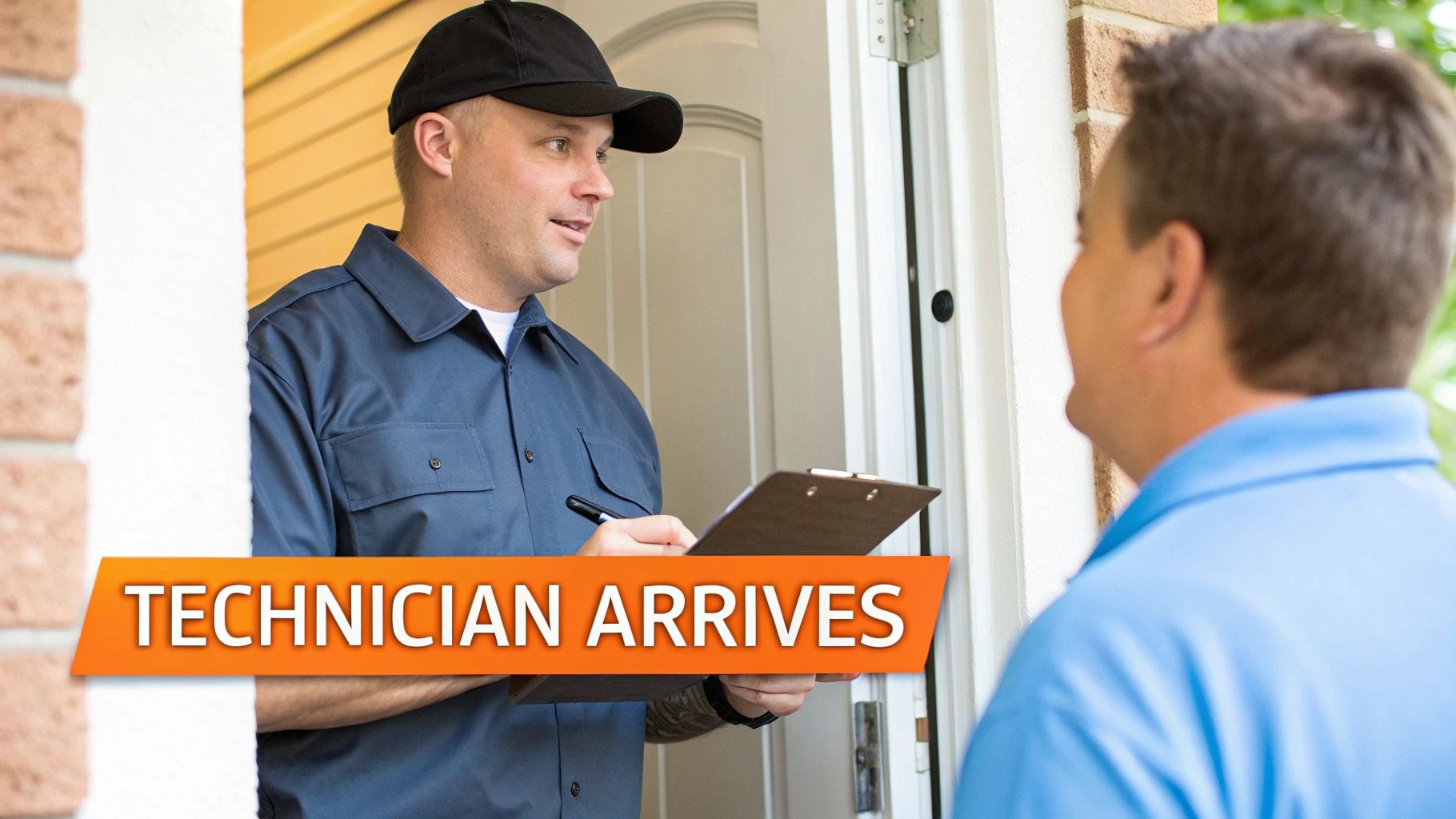
That feeling of relief when the technician’s truck pulls up is huge. But knowing what a real pro does next can calm your nerves even more.
Forget the image of someone rushing in, spraying wildly, and leaving. A legitimate pest control 24 hour service is methodical, even in an emergency. Their first job isn't to spray—it's to investigate. The whole process is designed to be safe, effective, and solve the problem for good, not just for tonight.
The Initial Inspection and Assessment
The first thing a good technician does is a thorough inspection. They won't just look where you pointed; they’ll check the hidden spots—potential entry points, nesting areas, and food sources you might have missed.
They'll also ask you a ton of questions about what you’ve seen, heard, and found. This isn't small talk; it's detective work. The more details you give them, the faster they can find the source of the infestation.
A technician's inspection might involve:
- Using a high-powered flashlight to check behind appliances, under sinks, and inside dark cabinets.
- Searching for droppings, shed skins, or chew marks in attics and crawl spaces.
- Identifying cracks in the foundation or gaps around utility pipes that act as pest superhighways.
Discussing the Treatment Plan and Safety
After the inspection, the tech will walk you through their findings and propose a treatment plan. This is your moment to ask questions. Seriously, ask anything you're worried about, especially regarding the safety of kids and pets.
A reputable professional will always put your family's safety first. They should be able to clearly explain what products they're using, how they'll be applied, and any precautions you need to take, like keeping your dog out of the kitchen for a couple of hours.
A true pro aims for the most effective, lowest-risk solution. They should be totally transparent about their methods. If they get defensive or can’t explain the safety measures clearly, that’s a major red flag.
This level of professionalism is becoming more critical. The global insect pest control market is expected to reach US$32.1 billion by 2032, and North America holds the largest share at 45.2%. This boom shows just how much people need reliable, around-the-clock pest management. You can learn more about the insect pest control market trends and see why expert service matters.
Understanding Emergency Pricing and Guarantees
Let’s be honest: emergency service costs more. A good technician will be upfront about the price before they start any work. You should get a clear, itemized quote explaining the after-hours call-out fee and the cost for the specific treatment.
There should be zero surprises on the final bill.
Finally, always ask about the service guarantee. What happens if the pests come back next week? A solid company will stand by their work, usually offering a warranty period where they’ll return for a follow-up treatment at no extra charge. This guarantee is what separates a quick fix from a real, lasting solution.
If you have any questions about what to expect, Call +1 855 224 3071 to talk to an expert now.
Preventing Your Next Pest Emergency
Getting through a pest crisis is a huge relief. But thinking the problem is solved for good once the technician drives away is a trap many homeowners fall into. Real peace of mind doesn't come from a one-time fix; it comes from turning that emergency response into a smart, long-term prevention plan.
After the pest control 24 hour service is done, your job shifts to making your home a fortress. These aren't complicated chores—just simple, powerful moves that make your property a whole lot less inviting to the next wave of invaders. It’s all about slamming the door on pests for good.
Seal Up Common Pest Entry Points
Pests don't need a red carpet rolled out for them. A tiny gap is an open invitation. The vast majority of infestations start when a single scout finds an easy way in. Your first and best defense is finding and sealing these hidden highways.
Start by checking these hotspots:
- Around Plumbing and Utilities: Get a flashlight and look under every sink and behind your washer, dryer, and fridge. Those little gaps where pipes and wires come through the wall are superhighways for roaches, mice, and more. Stuff any openings with steel wool (rodents can't chew through it) and then seal them with caulk.
- Foundation Cracks: Take a slow walk around the outside of your house and really look at the foundation. Even hairline cracks are big enough for many insects to squeeze through.
- Windows and Doors: Feel for drafts. If you can feel air, a bug can get in. Check for brittle, worn-out weather stripping and look for daylight under your exterior doors. A new door sweep is a cheap and easy fix.
If you want a professional eye on your home's weak spots, a scheduled inspection is worth its weight in gold. You can Call +1 855 224 3071 to have an expert come out and pinpoint every single potential entry point you might have missed.
Make Your Home Less Appealing to Pests
Once you’ve blocked the entrances, the next step is to get rid of what attracts pests in the first place: food, water, and shelter. You’d be amazed how much of a difference a few simple changes to your daily routine can make.
Put yourself in a pest’s shoes for a second. They’re wired for survival, constantly looking for easy meals and safe, dark places to hide. When you take those things away, you're basically putting up a giant "No Vacancy" sign.
A clean, dry, and clutter-free home is your most powerful pest deterrent. Pests are survivalists; they will always choose the path of least resistance. Making your home a difficult target is the key to long-term prevention.
This proactive approach is at the heart of modern pest control. It's a strategy you can learn more about by reading what Integrated Pest Management is and seeing how it creates a sustainable, long-term solution. Adopting this mindset is what separates a temporary fix from lasting peace of mind. For personalized advice on your home, Call +1 855 224 3071.
Questions You're Probably Asking About 24-Hour Pest Control
Let's be honest: the first thought that crosses your mind when you need an emergency exterminator is, "This is going to cost a fortune." A late-night call feels like it comes with a built-in surcharge.
While emergency service does cost more than a scheduled visit, you’re not powerless. Knowing the right questions to ask can keep you from getting a nasty surprise on the final bill. Here are the answers to the questions we hear most often from homeowners in a panic.
If you need answers fast, Call +1 855 224 3071 to talk to a pro right now.
How Much Is This Going to Cost Me?
There's no sugarcoating it—emergency service comes at a premium. You're paying for an immediate, after-hours response. Expect the starting cost to be around $250 and go up to $600 or more.
What makes the price swing so much? It boils down to three things:
- The pest: Getting a wasp nest off your porch is a much different job than dealing with a family of raccoons in the attic.
- The scale of the problem: A few ants in the kitchen is one thing. A full-blown infestation spread throughout your walls is another.
- Where you live: Like most services, prices vary by region.
Any reputable company will give you a price range over the phone. Make sure you ask them to confirm any potential trip charges or extra fees before they send a technician out.
Are the Treatments Safe for My Kids and Pets?
Absolutely. A professional's first priority is always safety. The products they use are designed to be safe for children and pets once they’ve had a chance to dry or settle.
Don't hesitate to voice any concerns you have. Your technician should be able to walk you through exactly what they plan to use and why. They’ll also give you simple, clear precautions, like keeping your dog out of a treated room for a couple of hours. The goal is always the same: use the most effective, lowest-risk solution possible.
Any professional worth hiring will stand by their work with some form of service guarantee. This isn't just a nice-to-have; it's a critical sign of a company's confidence in their treatment and their promise of quality to you.
What Happens If the Pests Come Back?
This is where a service guarantee becomes your best friend. A trustworthy company will always back their work, whether it’s a 30-day warranty or a longer-term agreement, depending on the pest.
Before you agree to any work, ask point-blank about their follow-up policy. If the pests show up again within that guaranteed window, the company should come back and re-treat the area at no extra cost. This is how you know you're getting a real solution, not just a temporary patch.
For service you can trust, Call +1 855 224 3071.
At Pest Control Service Finder, we connect you with pre-vetted, reliable exterminators who provide clear pricing and guaranteed results. When you're facing a pest emergency, you need a fast, professional solution you can count on. Visit us at https://pestcontrol-service-finder.com to learn more.